A Healing Herb (Tarragon)
A herb used for pain relief, blood sugar regulation and digestion
A Healing Herb Guide
Tarrogan is the twentieth herb to feature in my Healing Herb Guide.
The word
tarragon is derived from the Latin word,
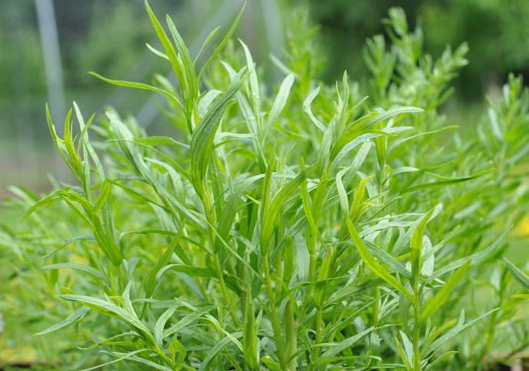
dracunculus, meaning 'a little dragon' and is thought to be native to Siberia, Mongolia and Eurasia. Tarragon, also known as
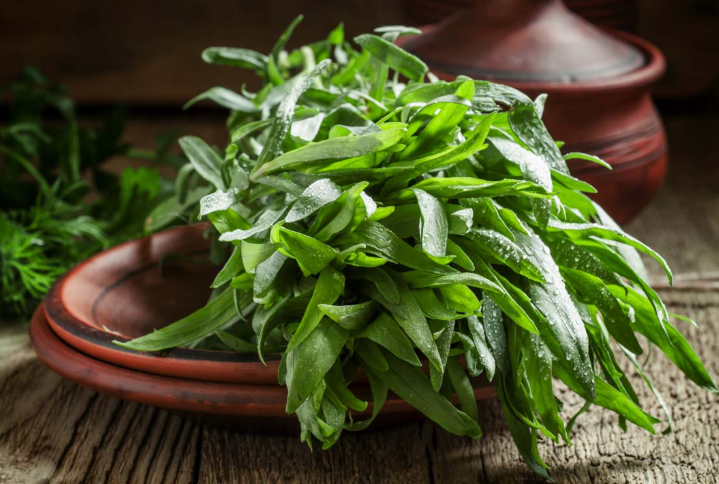
Dragonswort, Dragon’s Mugwort, Wyrmwort or Little Dragon. It is no surprise that this beautiful and often overlooked herb, with its abundance of slender, smooth-edged, glossy green leaves, at home in a warm climate, is a member of the Sunflower family.
There are three types of Tarragon:
- French Tarragon - a perennial that can only be grown through cuttings and dies down in Winter, often disappearing completely to come back to life in Spring; a mild aniseed flavour and a bit sweeter and more flavoursome than Russian Tarragon; has a numbing effect on the tip of the tongue when biting into a leaf.
- Russian Tarragon - can be propagated from seed (unlike Franch Tarragon); considered by some to be tasteless and a bit on the bitter side; leaves are harvested when young before the bitter tones start to dominate.
- Mexican Tarragon - a perennial also known as Winter Tarragon, Sweet Mace and Sweet Marigold; similar taste to French Tarragon with small, golden yellow flowers appearing at the end of the Summer which turn to seed.
Tarragon was introduced to England in the 15th century when it was grown in royal garden for its powerful medicinal qualities and culinary flavour. In was used as a remedy to treat digestive issues, toothaches, fevers and even rabies. Due to the
rise in French and Italian cooking towards the end of the Middle Ages, Tarragon became a popular herb for enhancing meat dishes and savoury sauces. In folklore, the symbolic
dragonwort name was linked to
warding off evil.
Tarragon is said to have been introduced by the Mongols during invasions during the 10th-13th-centuries as they expanded out of Central Asia. They most likely brought the herb to Europe as they used it for themselves. It then spread around the world via traders and crusaders. Today, it's grown in Eurasia and North America with major cultivation in America, Europe and Australia,
I hope you enjoy discovering the life-giving and healing benefits of Tarrogon - a medicinal, culinary and fragrant herb that will serve you well in support of your general good health, healing and wellbeing.
Folklore
Throughout the centuries, Tarragon has been used to ease poor digestion, intestinal problems, nausea, flatulence, hiccups, rheumatism, gout and arthritis. It was also used to soothe the pain of toothaches.
In the Middle Ages, Tarragon was used for the treatment of fevers, colds and digestive issues.T hrough the Georgian era, many believed that Tarragon could heal snake bites and ward off serpents and dragons hence it's Latin name meaning a little dragon. This may have been established because of Tarrogan's gnarled, rather serpentine, roots.
In the 14th century, Tarragon was introduced to France from Italy by St Catherine of Siena. Historical records show it was recorded in medieval writings as a medicinal herb. Catherine popularised the culinary use of Tarragon in an early form of French Cuisine which was blended with recipes and ingredients from her Persian origins.
Traditionally used to ease menstrual tension and assist in labour, Tarragon was considered a
women’s herb and was named after the
protector of women – the goddess Artemis - as reflected in its botanical name,
artemisia dracunculus.
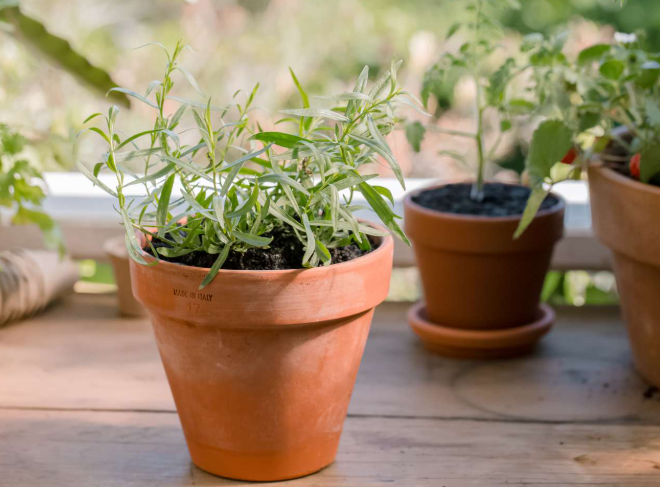
Remedies
The essential oil of Tarragon can be used in remedies for the effective treatment of a variety of ailments. The active ingredients found within Tarragon essential oil degrade quickly so you need to use it quickly and store it correctly.
Traditional Chinese Medicine uses Tarragon to strengthen and protect the liver which means it's ideal for making a Herbal Tea that can be sipped at intervals throughout the day.
French Tarragon Herbal Tea
This simple way to to enjoy a herbal tea that comes with many healing benefits. It helps to ease digestion, stimulate appetite and soothe cramps. It also helps with relaxation, improving sleep, managing blood sugar and easing pain. Adding some fresh Ginger provides an immediate cure for indigestion. You will need:
- A few springs x fresh French Tarragon (or 1-2 teaspoons dried)
- 8 oz of simmering filtered water
- A small stick of fresh grated Ginger
Directions
- Bring the water to a rolling boil in a small saucepan and pour over fresh leaves.
- Steep for five minutes.
- Strain into a large up or mug, add raw honey to taste and enjoy.
Recipes
Tarragon Herb Vinegar
This delicious and flavoursome herb vinegar is made by steeping a large handful of the soft tops of French Tarragon to organic apple cidar vinegar for a week. After this time, remove the herbs and strain into a glass bottle. Store in a cool dark place and use for salad dressings, savoury meat dishes and stews, and marinades.
Béarnaise Sauce
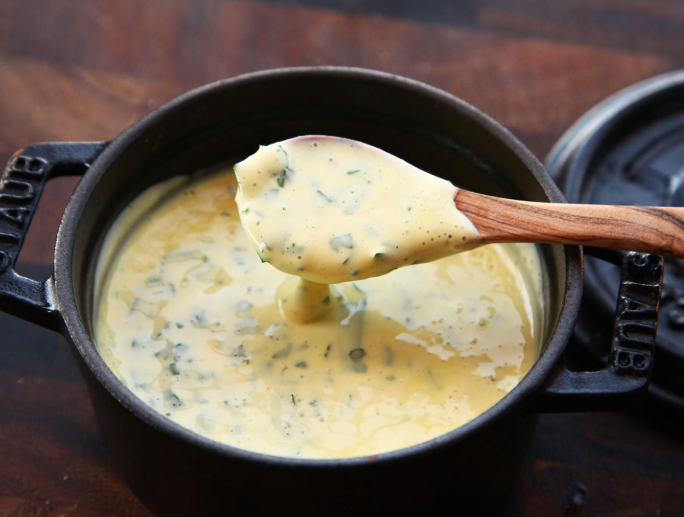
A drizzle of this rich creamy sauce enhances any savoury dish and, in particular, an organic steak! Its a smoothe, buttery and glossy classic that comes with a sweet and subtle anise flavour from the fresh Tarragon. It can be made in less than 20 minutes.
Bearnaise Sauce
- ½ cup x organic, grass-fed Unsalted Butter
- ½ cup x Tarragon Herb Vinegar (see above)
- 3 x organic, free-range egg yolks
- 1 tsp x fresh Lemon Juice
- ¼ tsp x Celtic Sea Salt
- 2 large tbs x finely chopped French Tarragon leaves
How to make
- Gently melt the butter in a small saucepan.
- In a high-speed blender, blend the egg yolks, herb vinegar, lemon juice and salt for 5 seconds until smoothe and combined.
- Set the blender speed to medium-high and slowly pour in the hot butter through the top lid cap opening.
- Continue blending until all the butter has been added and the mixture has emulsified.
- Pour the sauce into a bowl, stir in the finely chopped Tarragon and serve while still warm.
I hope you enjoyed learning about Tarragon which can be grown outside in pots during the Summer and brought inside for protection during the Summer months. Another versatile addition to your fresh herb collection for your good health and wellbeing.
I look forward to seeing you again soon.
Much love
Sue Xx
Thank you for sharing!
for you, for me and for Mother Nature
Latest Posts





All Posts