Things to do in Nature in February
Ways to get closer to Nature in the cold and crisp month of February

Build a Nesting Box
A wonderful way to show your love for our smallest feathered friends is to provide them with a nesting box ready for the Spring season.
With National Nest Box Week coming up from 14-21 February, you will find lots of inspiration and expert guidance on how to look after birds who are in need of a helping hand during the coldest month of the year.
If have the skills to make your own wooden nesting box (or want to learn how to) there are two different styles to consider for different garden birds as follows:
- House Sparrows, Tree Sparrows, Nuthatches, Pied Flycatchers
Nesting boxes with a small hole (32mm diameter) - Blue Tits, Coal Tits, Great Tits
Nesting boxes with a small hole (25-28mm diameter) - Robins, Wrens, Spotted Flycatchers, Pied Wagtails, Blackbirds
Open-fronted Nesting Boxes (20–25cm high x 15–20cm wide x 15cm deep)
The Wildlife Trust provide a simple and colourful instruction guide that can be used to make either of the above designs. They tell us that: Nestboxes placed in gardens can make a real difference to the success or failure of a breeding species in an area, especially when accompanied by the regular supply of suitable food and water.
There is no standard, accurate design for a nestbox. Birds do not insist on their nest sites being mathematically precise! What they do require is a nest site which is secure and weatherproof, and as safe as possible from predators. Make the box to suit the materials available and to provide the best camouflage, rather than buying materials to match any given dimensions.
Nest Box Week provides guidance on buying suitable Nesting Boxes - Buying A Nesting Box.

Enjoy a refreshing walk
Some of my favourite places for long leisurely walks in Devon include national forests, ancient woodlands, coastal paths, moorland tors, healthland and rivers.
At this time of year, pathways are cushioned and coloured with fallen leaves and bright green moss, mature ferns and holly tree branches with bright red berries. Mother Nature's palette is rich and to be experienced as Nature sparkles in the cool air, especially after the rain.
Many of these areas are deserted during the Winter months so you can experience the feeling of being far from the maddening crowds to enjoy an invigorating walk exposed to the elements surrounded by the beauty of the surrounding landscape.
Walking is a wonderful way to release tension, tune into the natural rhythm of Nature and feel gratitude for the natural world that sustains us all through the year.
Take in some natural sounds
A Fortuitous Fox
Listen our for the eerie night-time screeches and barks of Foxes in the wild. They are most vocal in Winter as it’s their mating season when sound travels further through the cold air. Their calls can travel a long way to attract a mate or fend off rivals, especially threats related to hunting which involves a complex system of vocalisations, scent marking and body language.
As highly territorial, mostly nocturnal and highly intelligent creatures, Foxes use these methods to alert family members or mates. Such is my love for these sentient creatures, I wronte a poem and video, A Fox Runs, to describe what can only be the horror of the hunt from a Fox's perpective.
A short, explosive scream will tell you it's a male aggressively warning off a rival, while a longer shriek is more often made by a female calling out for a mate. You might hear a series of three or four barks representing contact calls which are often followed by a scream.
A Territorial Bird
If you enjoy the sound of melodic whistles and warbles, and the often high-pitched, complex and crisp songs birds in their bid to advertise and defend their territory.
One of the most appealing is a Robin's clear, confident and high-pitched melodies, at this time of year marking the transition from a quieter Winter tone to a more vigorous Spring song as they begin to establish their breeding territories.
The Robin's song is always worth pausing to listen to. Characterised by delicate yet upbeat warbles and trills, this fiery little bird is one of the few we can listen to all year round as it sings to defend its Winter territory and starts wooing a mate ready for the nesting season. Step into your garden, take a walk in the lane or visit your local woodland to spot one – although you will probably hear it first.

A Nocturnal Owl
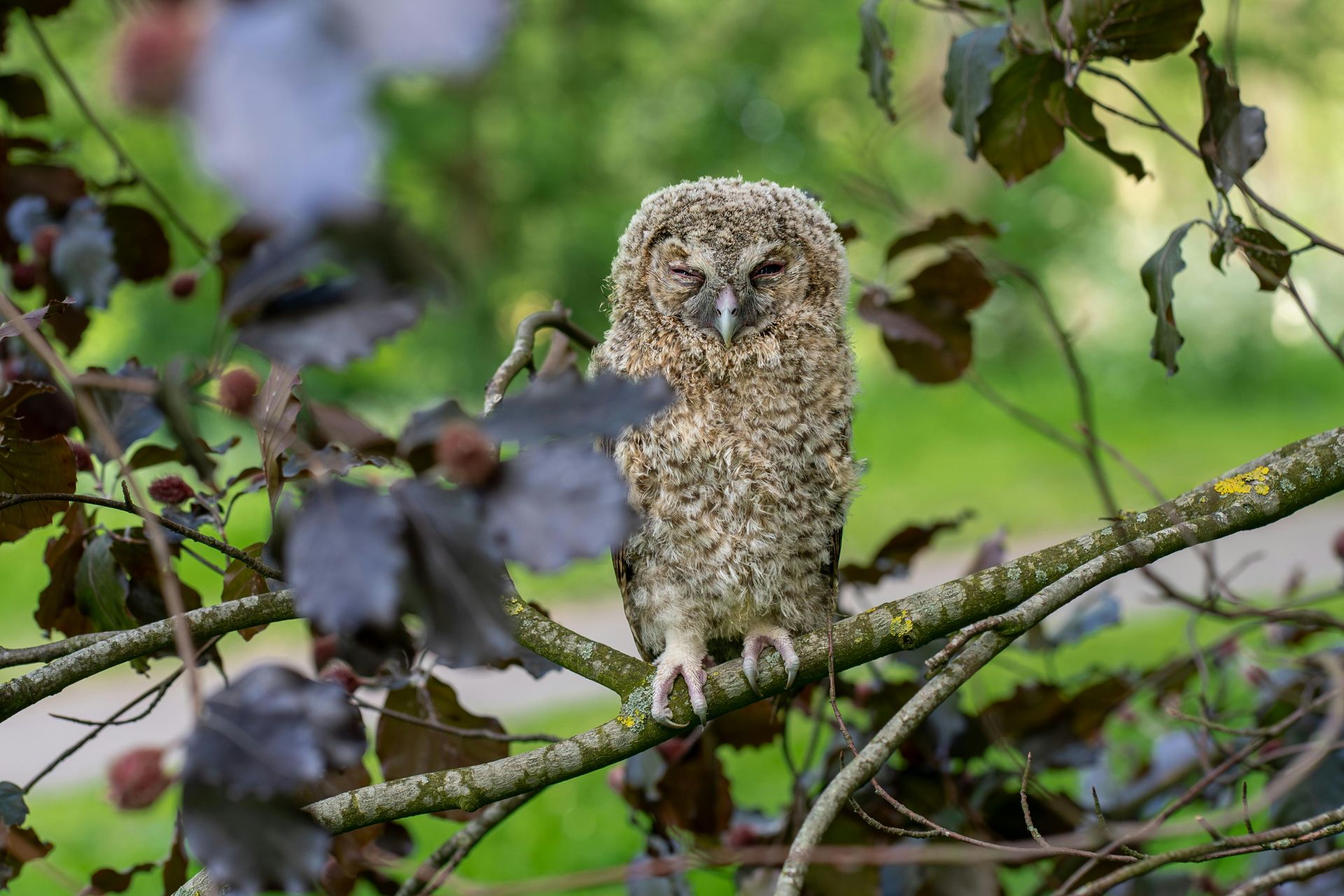
The Tawny Owl is one of the most well recognised and haunting sounds of an inky black Winter's night as this beautiful bird of prey calls out to protect its precious territory in advance of nesting which begins later this morth.
All Owls are nocturnal which means you are more likely to hear one than see one late at night. Their calls can be heard from a lofty height high up in the trees with the female making a sharp, high-pitched kee-wick (or ke-wick) call, followed by the male who responds with a wavering, resonant hoo-hoo-hoo.
Tawny owls are unable to hunt when the ground is covered in snow because their prey tends to scuttle through corridors that run beneath the surface. On a wet and windy night, you may hear the screech and hiss of a Barn Owl flying past in the night sky, otherwise silent as stealthy predators with their excellent precision sight and formidable hearing.
A Winter Forest
Take a walk in ancient woodland or a natural forest to experience the creaking of tree trunks, branches rubbing together in the wind, boots on crunchy ground and dry leaves rusling underfoot.
There is nothing like a cold and crispy day to ampliphy Nature's beauty and enliven the senses with the sights and sounds of Winter. There is no other more healthy way to relax the mind, move the body and invigourate the soul.
I hope you enjoy making the most of your time spent in Nature this month and I look forward to sharing more ideas with you in March 2026.
Much love
Sue Xx
Thank you for sharing!
for you, for me and for Mother Nature
Latest Posts




All Posts