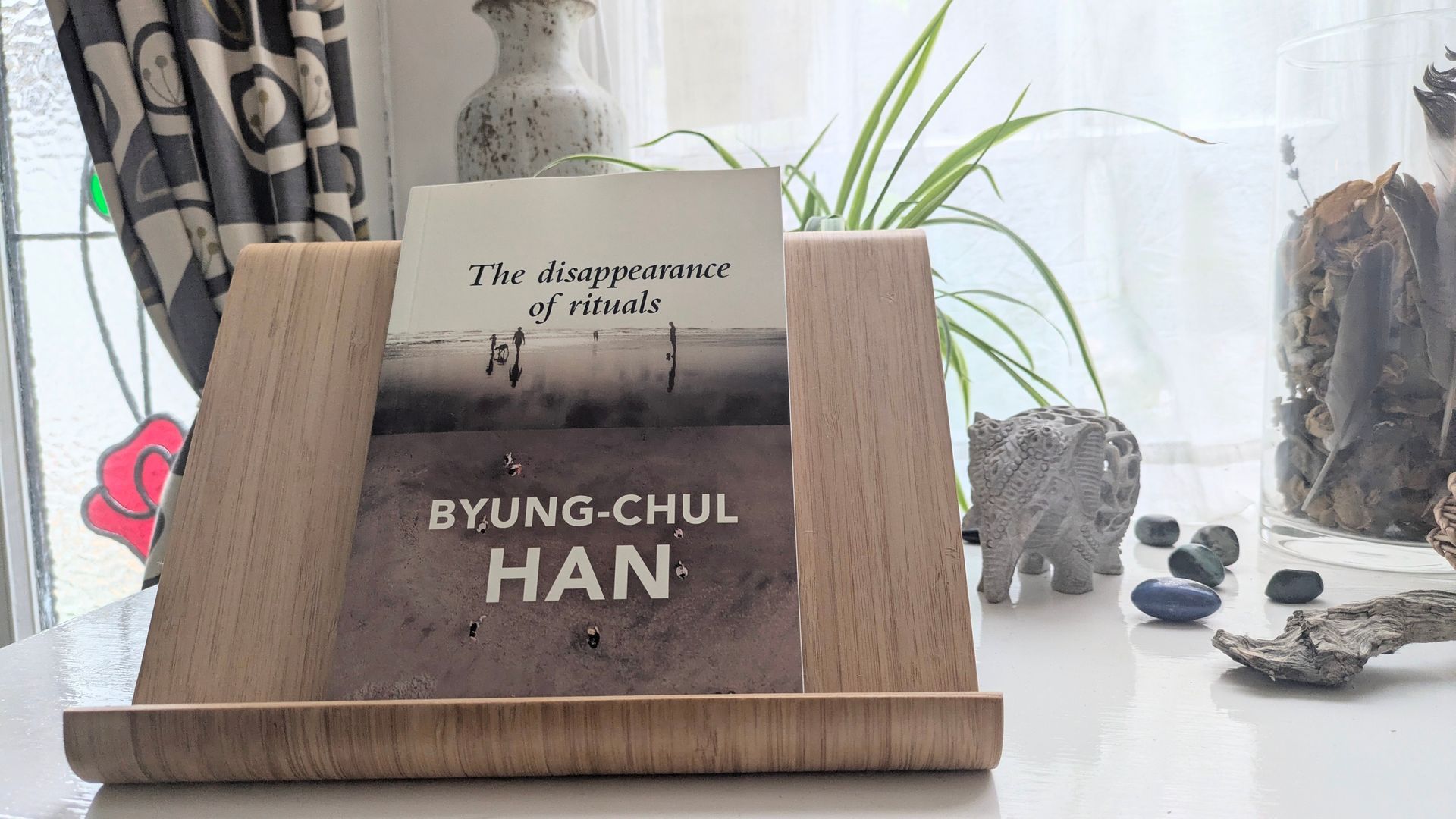
The Revenge of Analog by David Sax
The importance of real things and why they will always matter to us
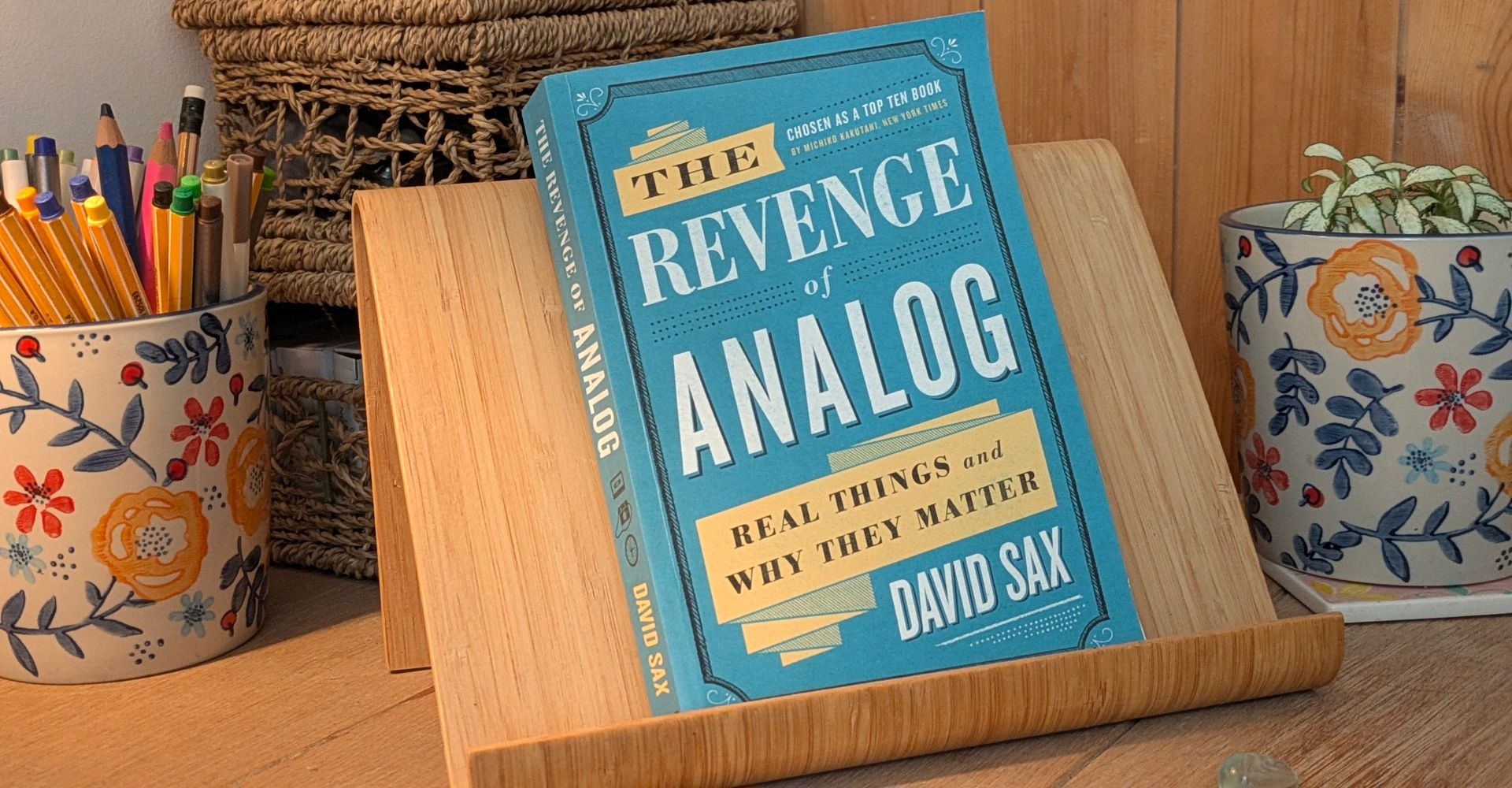
The Revenge of Analog written by Canadian journalist, David Sax, is a book that explores the growing demand for analogue goods including vinyl records, paper and pen, printed materials, books, film reels and board games in an increasingly digital world. Published in 2017, this book is as relevant today as it was nearly a decade ago, and, rather heartwarmingly, our craving for the tangible and tactile experience of analogue items continues to rise.
Apart from providing fascinating insights into the way analog products are produced and how these old ways of doing things have been revived, I was particularly interested to learn about the health benefits of going analogue and how the use of such items brings us back to Nature and the simple pleasures in life that we have always enjoyed.
Many of us are keenly aware of the fact that screen time on digital devices encroaches on time that could be spent outdoors enjoying physical experiences in Nature or doing things together, communicating in person and building a sense of community. This disconnection from the real world has been proven to reduce environmental literacy and spatial awareness.
More alarmingly, digital products and services require massive amounts of energy to power devices, networks and data centers, driving emissions, huge water usage for cooling that puts a devastating strain on local supplies, land use with widespread habitat destruction and polluting electronic waste. More recently, this has been exasperated by the move towards Artificial Intelligence (AI) which has led to even greater increases in demands for electricity, water, air and noise pollution and the mining of minerals for components.
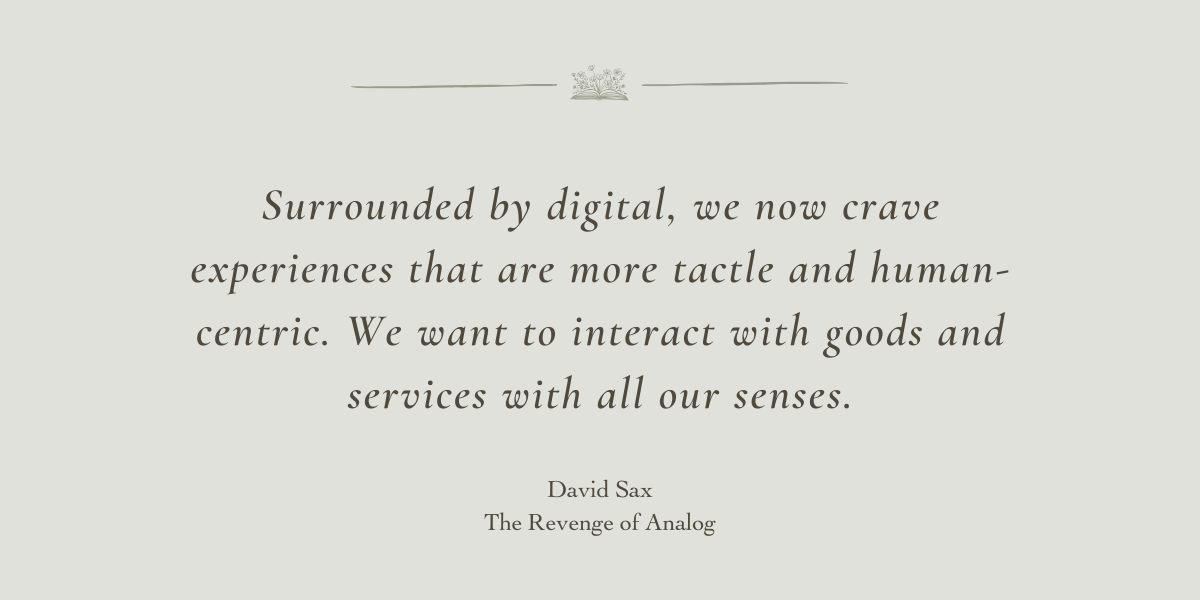
Analogue investment
Reasons for investing in analogue experiences are increasingly pertinent as they connect us to Nature in ways we are not perhaps aware of. These include:
- Tangible, multi-sensory interactions that encourage mindfulness, presence and a slower pace of life.
- Engaging a broader range of senses such as reading a physical book, listening to a vinyl record or handling soil while gardening, provides a rich sensory experience that strengthens our connection to the physical world.
- Using a film camera, playing an instrument and spending time in Nature demand our full attention and help us to focus on the present moment providing reprieve from the constant distractions and notifications of digital life.
- The deliberate slowness of the analogue experience aligns with the natural rhythms of life and offers an antidote to digital overload and the feeling of being overwhelmed.
- The unique imperfections of analogue such as the grain of a film photo or the background noise of a vinyl record, provide textures that feel more real and human than the flawless, sterile outputs of digital technology
- Analog interactions generally involve face-to-face engagement, such as playing board games or having a conversation without phones present. This enhances our sense of community and belonging, which is a fundamental aspect of the human experience within the natural world.
One of the most interesting resurgences is that of board games In the British Isles and America, fueled by Board Game Cafés, specialty stores and major events that prove there is an increasing desire for social connection, memorable experiences and a desire for face-to-face interactions.
As David says, playng a board game in a netural environment, transforms the way its players relate to one another. They engage, They speak, They laugh. They embrace vulnerability. This is cruicial because, once we remove ourselves from the flow of physical, messy, untidy life, we become less willing to get out there and take a chance.
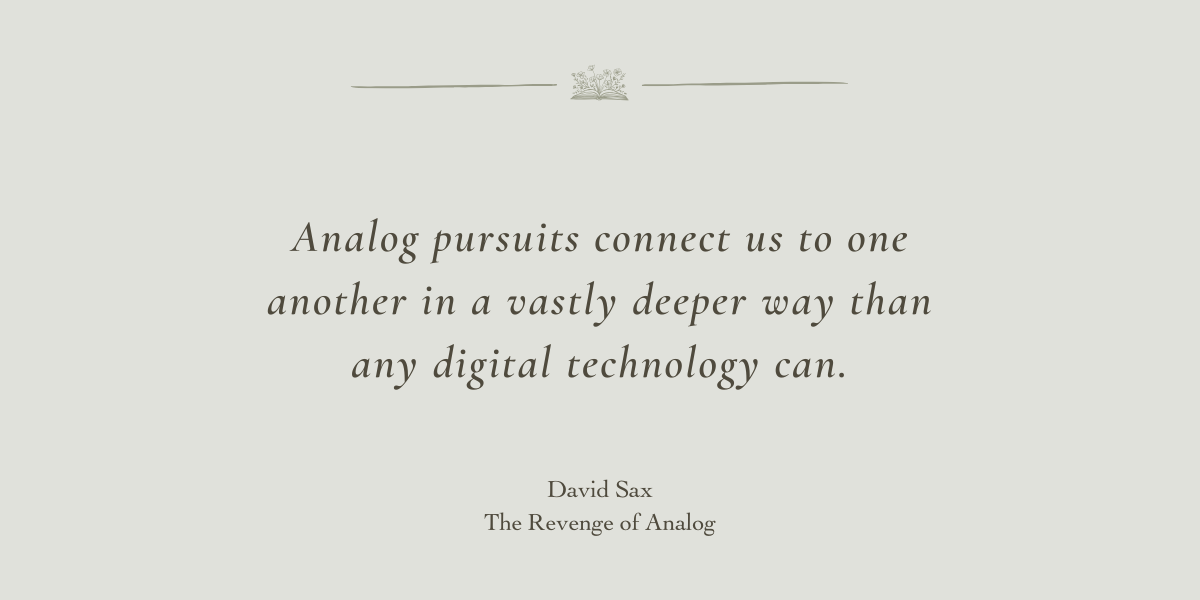
Analogue resurgence
The resurgence of analogue over the last ten years represents a cultural shift towards more physical, non-screen-based experiences. This is driven by nostalgia, individual choice, a desire for tactile connection and a pushback against digital saturation which David explores in terms of the booming demand for vinyl records, paper notebooks, film photography, board games and more.
At the time The Revenge of Analog was published, record stores were not only back, but were actually thriving. In fact, vinyl records have seen over sixteen consecutive years of growth in the British Isles alone with Gen Z customers being a significant driver of sales. Over the last decade, the number of vinyl record manufacturers has grown from under 100 plants worldwide in the early 2000s to potentially over 200 today, with America seeing numbers rise from around 15 to 40 plants in the same period.
Younger generations are setting the trend in their natural desire to seek authenticity, a sense of personal identity, ritual, and a deeper, more meaningful way to consume art and media. This does not mean a rejection of technology and the need for smartphones, it's more about rebalancing digital and physical aspects of life where the analogue experience offers more tangible art, a deeper focus and memorable experiences that can be shared.
For those with an interest, The Return of Analog provides detailed insights into the difficulties of rediscovering old plants, reclaiming and repairing equipment. The highly variable nature of the process requires a heavy human touch. To invest so much time, money and energy in the production of vinyl records (and old fashiioned film), requires a certain passion that requires an appreciation for authenticity and the knowledge that such items provide consumers with a genuine sense of ownership over the music which translates into pride.
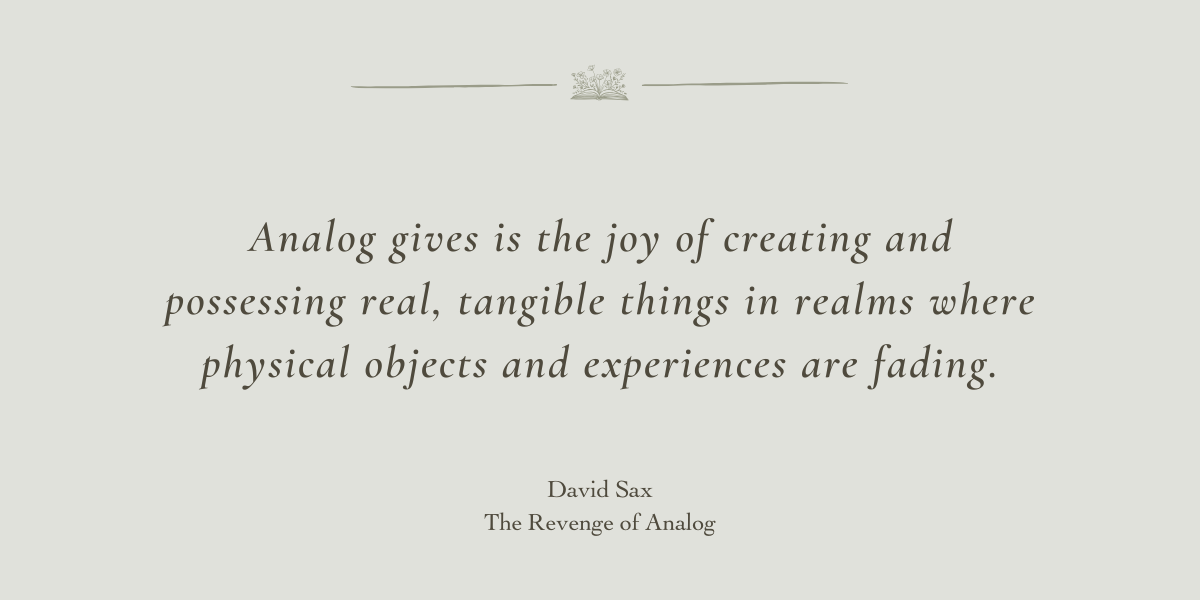
Ignite your analogue
One of the most interesting revelations of The Revenge of Analog is that the digital world values analog more than anyone where those who work in digital technology harbour a deep passion for analog things.
On futher investigation, David found that Silicon Valley was awash with analogue interventions including meditation as a personal growth activity, open office floor plans to increase real-time conversations, writing on whiteboards to bring engineers out from behind their screens, and a proliferation of Moleskine diaries, limited-edition notebooks and high quality business cards that provide a tangible way to exchange contact details and make a lasting impression.
There is an irony here that cannot be overlooked. The fact that every digital innovtation starts on paper, often as a rough sketch that can be produced far quicker than opening up a laptop or a computer sketch pad that takes a long time to learn how to use. The fact is that digital corporations are not embracing analog because it's cool, they are doing it because analog proves the most efficient, productive way to conduct business.
So, if you can see the sense in reverting back to a more analogue existence, here are just a few ways you can redress the balance:
- Use a classic alarmoclock and analogue wrist watch.
- Establish screen-free areas/times in the home such as bedrooms, dining areas and living rooms.
- Carry a book to read and a journal or notebook with a favourite pen or fountain pen.
- Read physical books and magazines for the tactile experience of turning pages to improve comprehension and focus.
- Write with pen to paper, send hand-written letters or postcards to friends, clients and family members.
- Take up an analogue hobby such as such as gardening, drawing, painting, knitting, crocheting or woodworking.
- Invite friends round for a board game party or find your local Board Game Café.
- Spend more time in Nature.
- Cook something from raw and wholesome ingredients (remember that organic is always best).
- Listen to music on a vinyl record or snap some pictures on an analogue camera to see what might transpire.
I hope you enjoy becoming more analogue for all the benefits it brings and I look forward to seeing you next time.
Sue Cartwright
Spiral Leaf
Thank you for sharing!
for you, for me and for Mother Nature
Latest Posts





All Posts