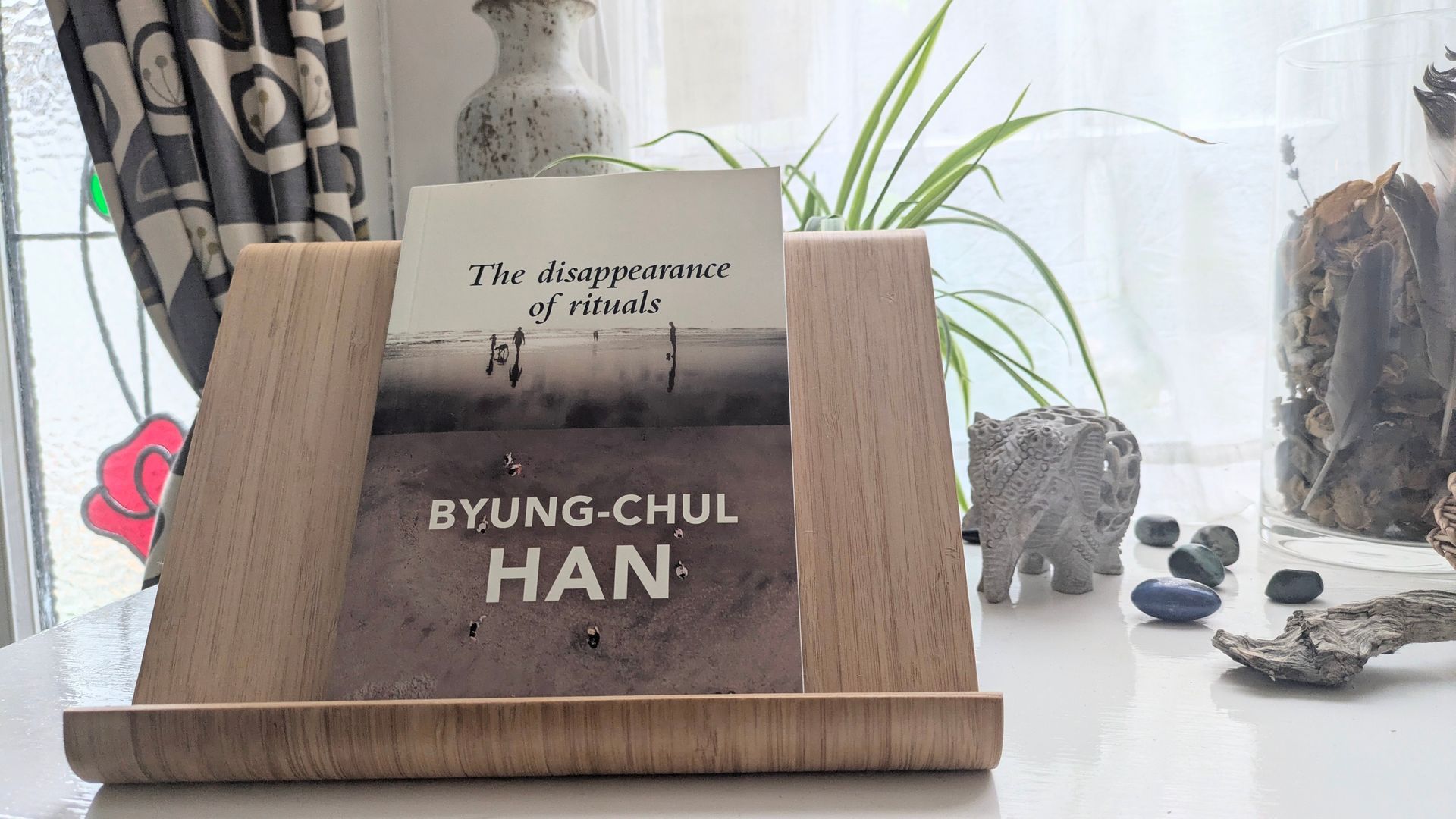
The Elements of Style by William Strunk Jr and E B White
A classic pocket book for discerning students and creative writers

At a time when imagination, literacy and critical thinking are increasingly threatened by the dopamine distraction of the AI prompt, I wanted to share a little book that has been a go-to for many a discerning student writer since its inception in 1919. This timeless classic, less than 100 pages long, provides clear insights into the infinite potential of style, nuance and composition proffered by the English language, with the opportunity to learn how to use it well.
The story of how this timeless pocket book came into being is as simple as it is remarkable with its authors being unique collaborators, working separately and decades apart.
The tale begins with Elwyn Brooks Write who was a student of Professor Strunk at Cornell University in upstate New York in 1919. Will Strunk was teaching a course called 'English 8' that came with a slim volume of Elements of Style fashioned into a pocked-sized text book that was printed privately by the professor for his students.
Elwyn passed the course and gradulated from the university and it wasn't until thirty-eight years later in 1957, following Will Strunk's death in September 1946, that Elwyn revisited his copy of the book which he said: seemed to me to contain rich deposits of gold.
Elwyn embellished Will's teachings by adding passages about the power of words and the clear expression of thoughts and feelings. As Charles Osgood says in his Afterword: To the nuts and bolts of grammar, [White] added a rhetorical dimension. Most helpfully, there is a comprehensive Gloassary prepared by Robert DiYanni, where you can learn the meaning of language-related words and terms, and when best to use them.
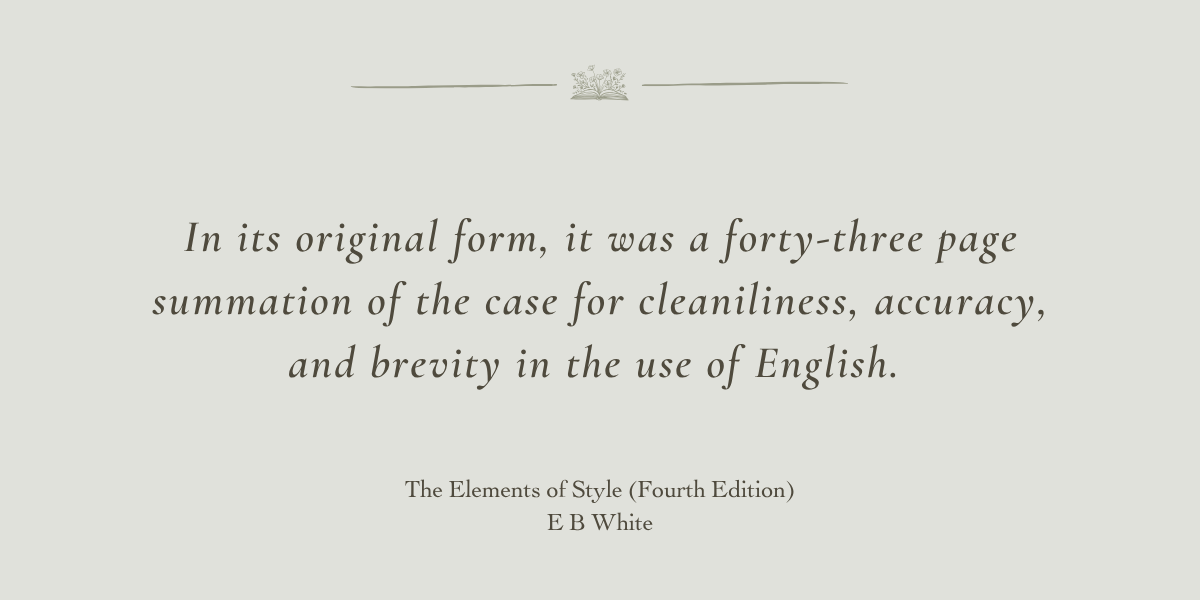
Elements of style
The elements of style is clearly set out into chapters or sections including:
- 7 rules of useage
- 11 principles of composition
- A few matters of form
- A list of words and expressions commonly misused
The above chapters focus on WIll Strunk's fundamental teachings in grammar, punctuation, forming sentences and shaping paragraphs without using needless words or loose sentences.
To this foundation, Elwyn adds his own almost poetical chapter - An Approach to Style - where he explores the broader meaning of writing style in the sense of what makes it distinguished and distinguishing to the reader. It is described as a higher mystery where there is no satisfactory explanation of style, no infallible guide to good writing, no assurance that a person who thinks clearly will be able to write clearly, no key that unlocks the door, no inflexible rule by which writers may shape their course. Writers will often find themselves steering by stars that are disturbingly in motion.
As such, we appreciate the advice (and list of reminders)
drawn from a writer's experience of writing.
Elwyn was, after all, an American writer and essayist known for his classic children's books including
Charlotte's Web and
Stuart Little.
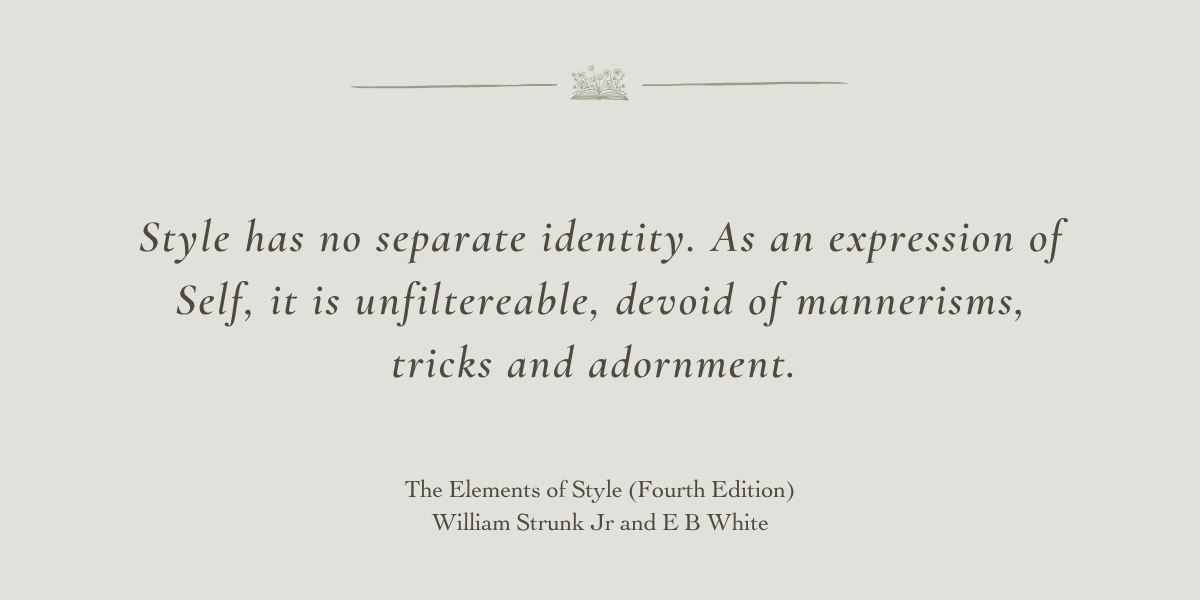
Rules of useage
There are eleven elementary rules of useage that cover apostrophes, adding 's, using commas, enclosing parenthetical expressions between commas, forming sentences, using colons and semi colons, using dashes and the proper use of a pronoun.
These rules are easy to follow with several examples provided for each so that they can be remembered. It means you can adopt the correct application of the Englishg language without having to remember the formal terms. Some are less technical and all provide clear guidance on how to write for clarity, accuracy, cleanliness and brevity of style.
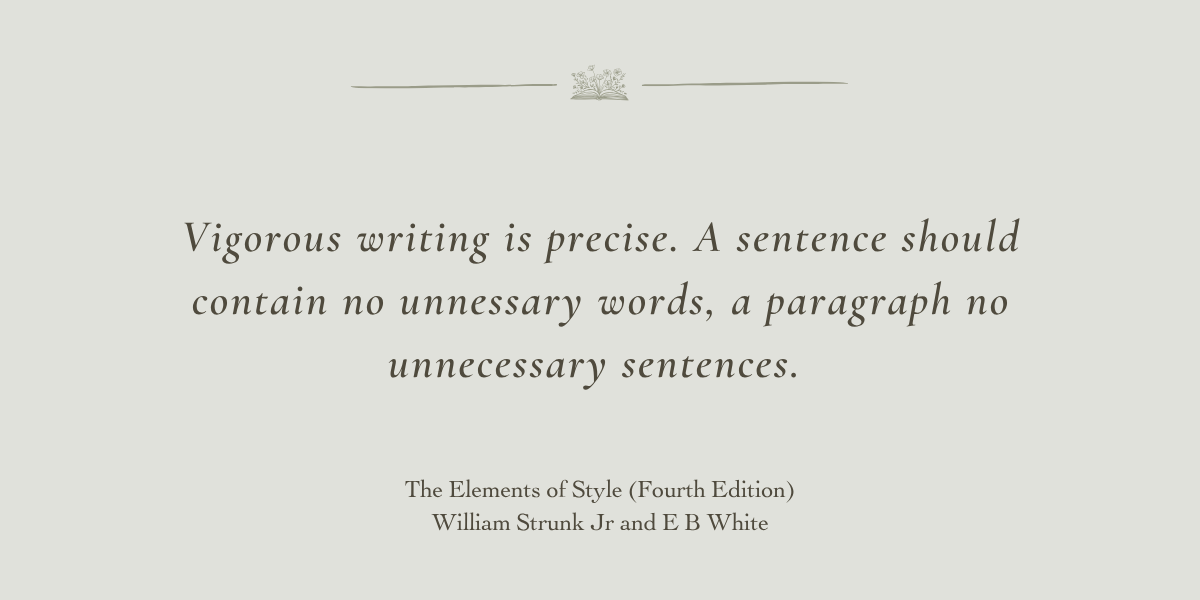
Principles of composition
Will Strunk makes it very clear that planning must be a delibertate prelude to writing which is to foresee the shape of what is to come and pursue it. It is where he explains the importance of the order and division of paragraphs in the development of a subject, and how they control the pace, flow and direction of a piece of writing, interspersed with rhetorical pause, or the use of the active voice.
It is where he describes the importance of using
statements in positive form, and where
all significant details are given the vigour and all the needless words omitted. It is where loose sentences are replaced with
simple sentences, sentences of two clauses joined by a semicolon, preriodic sentences of two clauses, or sentences (loose or periodic) of three clauses - whichever best represent the real relations of the thought.
Matters of form
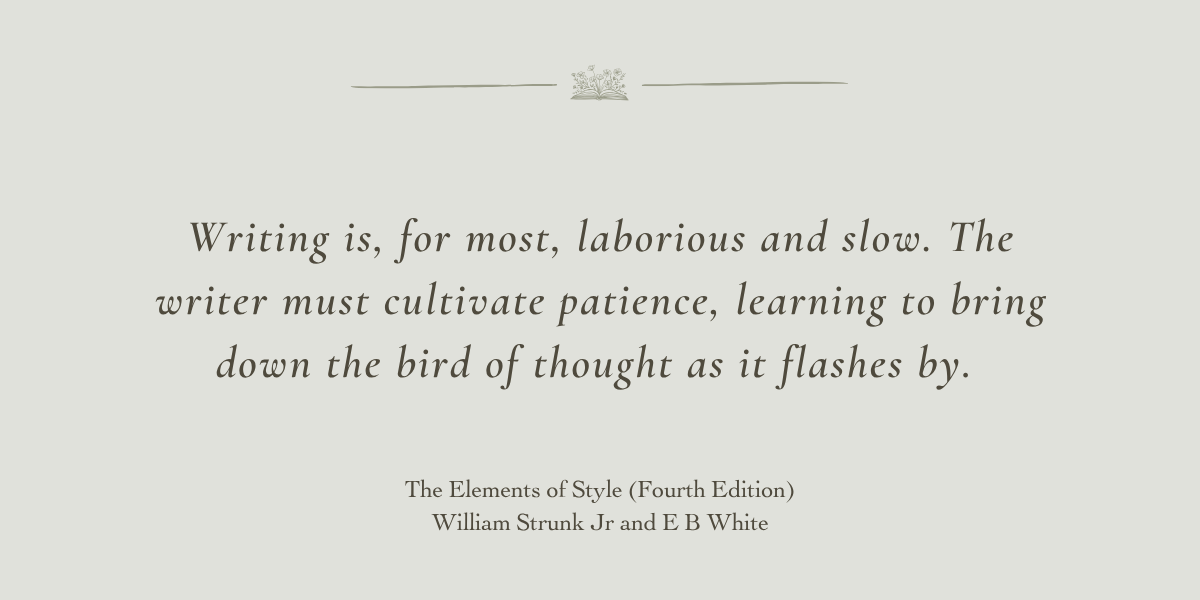
This chapter contains a definitive bundle of tips and tools on things like using colloquialisms (informal words and expressions), exclamations, headings, hyphens, margins, numerals, parentheses (enclosures with extra information, explanations or asides), quotations, references, syllabication (dividing words into syllables) and titles.
This section is very convenient when writing formal communications or professional documents that require a certain layout, positioning of titles and headings, the use of (and not use of) hyphens, how wide your margins should be, how to write numerals in figures, letters and words, how to write quotations, references, titles and so on.
Make your own rules
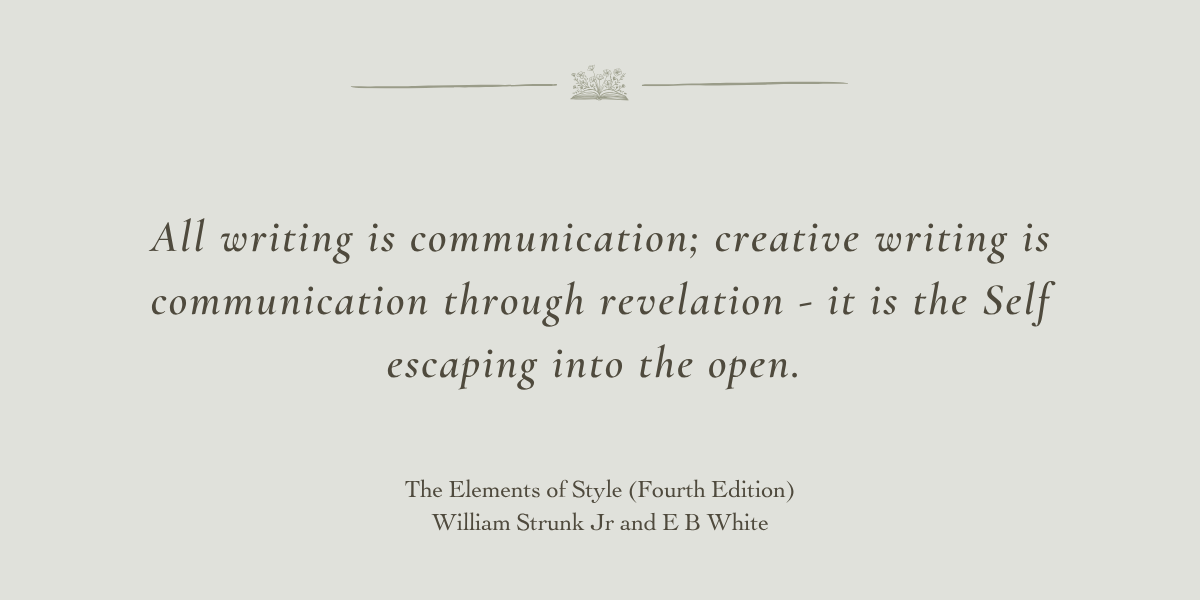
While I recommend following the fundamental principles set our in this book as a means to write what you want to say with clarity and accuracy, not every rule is sacrosanct and not every principle lends itself to a rigid structure that cannot be adapted to accommodate your own particular style giving a certain nuance to your writing.
There are exceptions to the rule. We are reminded that grammatical rules are arbitrary standards, like the dress code at a club. It’s good to know the code to prevent feeling out of place, but taking the rules too seriously can be counter-productive. As in every sentence, the nuance is the important thing, the subtle difference in meaning, expression or intention, subtleties that can be distinguished or, rather, recognised or treated as something different.
I myself break Strunk and White’s rules in several ways. You might say, they have become distinguishable to my writing style. These include the rule that says: red, white, and blue or red, white, or blue' which for me simply looks odd, so my rule removes the last comma to read: red, white and blue or red, white or blue. I never use the American-style 'z's in my words, even though publishers might insist on them. I will not put "quote marks" around a highlighted 'word or phrase' nor will I use too many commas and full stops, ie, just one comma after the 'ie' or 'eg' is enough for you to know what it means.
So, if you want to type two spaces after a full stop or adopt your own rules for things that make sense (or look good) to you, then go ahead and do so. I do, however, recommend using this wonderful pocket book as a guide. As in most things worth doing in life, it is best to learn the fundamentals from a master so that you can confidently make your own adaptations as you grow. This takes practice and a certain amount of discipline but in the end, it frees you to develop your writing acumen and your own elements of style.
Thank you for reading my review and I see below to purchase your own copy.
Sue Cartwright
Spiral Leaf
Buy the book!
The Elements of Style (Fourth Edition) by William Strunk Jr and E B White
Eats, Shoots and Leaves - The Zero Tolerance Approach to Punctuation by Lynne Truss
Clicking on the above link will take you to my online bookshop where Spiral Leaf may earn a small commission on books sold at no extra cost to you!
Thank you for sharing!
for you, for me and for Mother Nature
Latest Posts





All Posts