Raising Hare by Chloe Dalton
A delighfully mutual relationship between a human and a wild animal
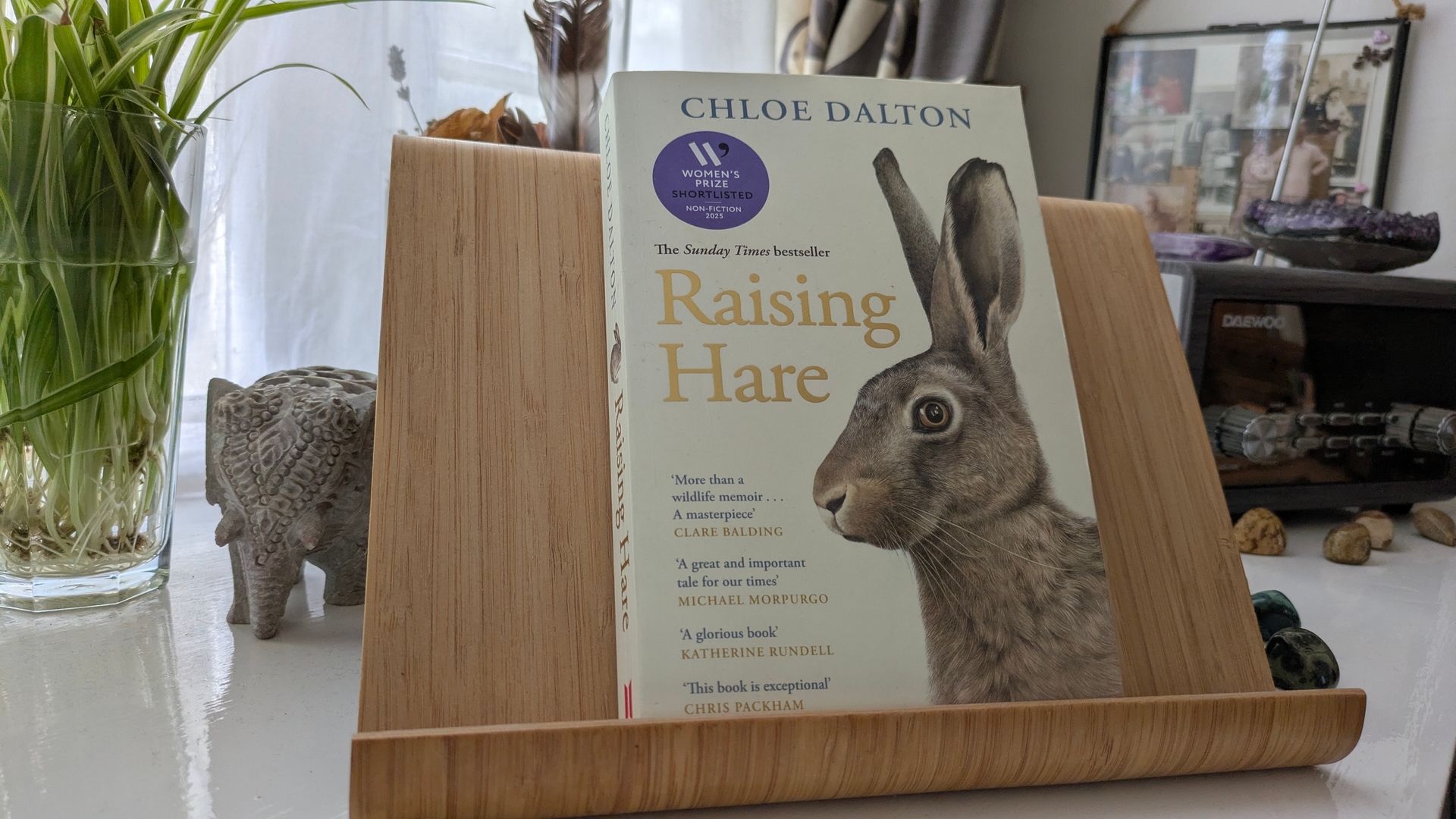
With such a beautiful image on the cover and with such an enticing title, I couldn't resist picking up this intriguing book from the stand and I am very glad I did. When I opened the book at a random page - being careful not to crease the cover or leave any trace of a sneak peek - one sentence jumped out at me: To name the hare was to proclaim it a pet, and that would, I felt, be to take something away from it - the deal was sealed.
The author, Chloe Dalton, is a writer and political advisor who came across a tiny leveret on its own on a pathway near her home in the countryside. She tells the enchanting story of her decision to rescue this little orphan and the relationship that ensued. As a result of this highly personal and deeply profound learning experience, Chloe is campaigning for better protection for Hares.
Chloe is calling on the Government to stop the shooting of Hares during their peak breeding season, by establishing a legally enforceable close season for Hares in England and Wales, from 1st February to 30th September. While it is generally illegal to chase Hares in the British Isles, chasing, catching or killing Hares with dogs (known as Hare Coursing or Hare Hunting) is strictly prohibited.
A difficult decision
Starting from the premise that Chloe had no intention of turning her new found leveret into a pet, a sentiment bound out throughout the course of the book, I was intrigued to know how things worked out. It started with a difficult decision that would put anyone on the spot - especially when it is known that mother Hares raise their young individually in thier own 'forms' rather than in a burrow or nest. Chloe learned more about this as the Hare was growing up but to begin with, when she stumbled across this little creature all on it's own, she was not sure what to do.
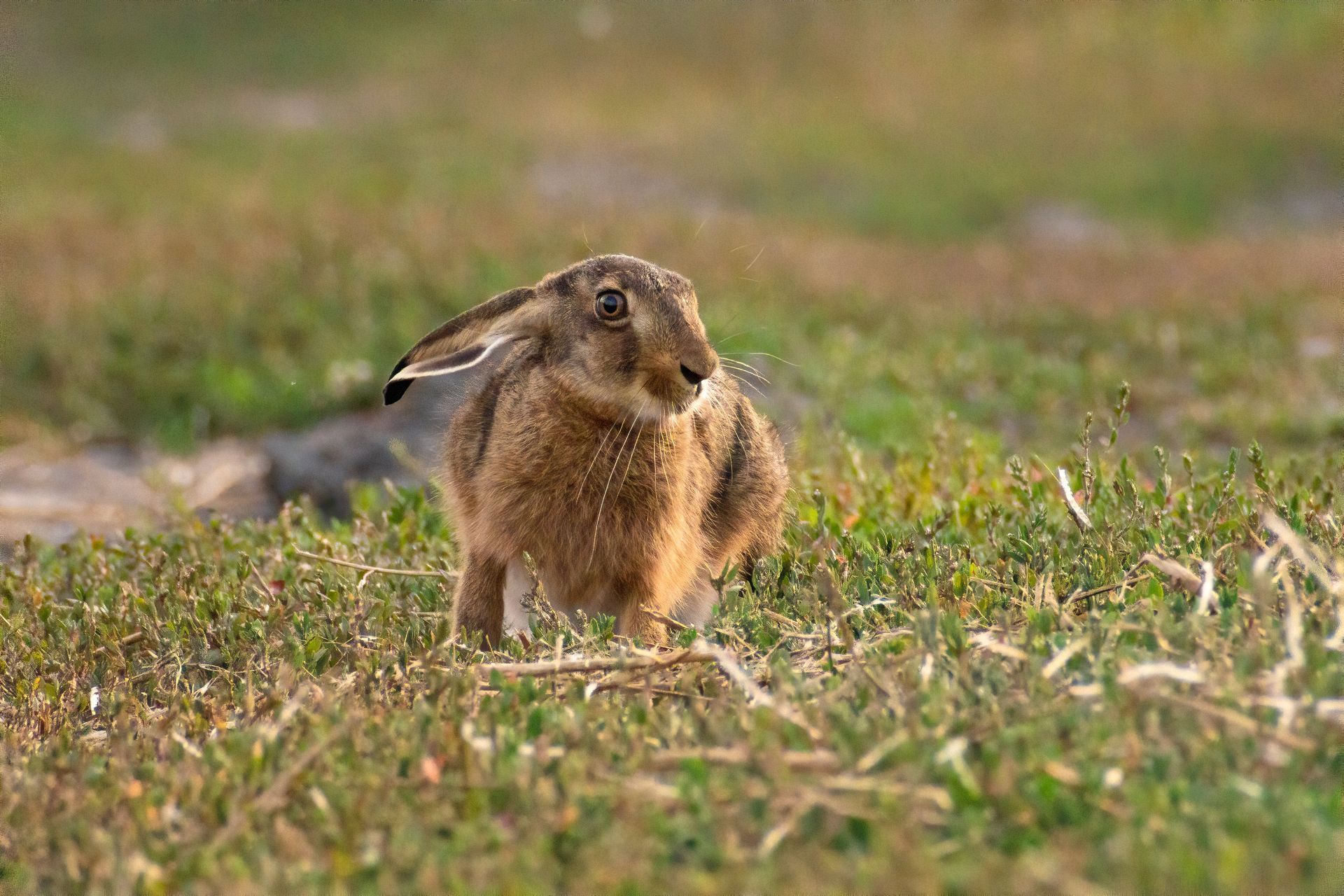
To see a leveret lying out in the open - or at all - was very surprising. The most likely explanation for its exposed position was that it had been chased, or picked up and dropped, by the dog I'd heard and had ended up lost on the track. I considered the options. I could leave the leveret where it was, hoping that it would find its way back into cover and be retrived by its mother before it was found by a predator or crushed by the wheels of a passing car.
At this point, Chloe is very aware that if she touched the tiny Hare, its mother might not be able to find it or might reject it, so she hesitantly left it - marking the fence posts so that she could return later. Four hours passed by and she returned to the same spot to find the leveret exactly as she had left it, precariously sitting on its own in the middle of the path.
The decision was made to take the leveret home until nightfall and then return it to the place it had been found. The little bundle was gathered up in handfuls of dead grass and it did not flinch. It seemed unafraid and made no attempt to run away from me.
A budding relationship
To cut a long story short - a story that makes for very easy and delightful reading - the leveret took very kindly to being rescued and once the correct proportions of milk and water (appropoaiate for a being only a fraction of the size of the smallest of lambs), Chloe began her journey of discovery as a foster carer for a wild creature that quite innocently took to her care like a little lamb and settled in very nicely.
The leveret had every opportunity to break free and run back into the wild but quite endearingly chose not to and so the story continues.
I bent down and watched the leveret for few moments, looking for any sign that it might be hungry, thirsty, cold or afraid. It lay unmoving, its paws held out before it and its ears resting snugly on either side of its spine. Its dark eyes gave northing away. Wishing fervently for it to survive, I turned off the light and went to bed.
Can you imagine the wonderful discovery in the morning of the leveret lying in a nest of grass it had made for itself in the garden that was - scarcely larger than its body. With the help of her sister, who procured a box of powdered kitten milk with a fify-millilitre feeding bottle, Chloe was delighted when her tiny charge drank the first teaspoon of milk. This was after taking the trouble to santitise her hands to feed the little thing in the t-shirt she had worn the day before (to smell familiar) as she held it loosley wrapped in the same dust cloth.
Chloe's discernment and determination to strike the right balance between being a carer of a vulnerable wild animal and a respectful human being (towards the wild animal), ultimately paid off. This enabled the most meaningful relationship to unfold. It's a delicious story about the fine and unseeable line between our world and the wild, one we can experience through Raising Hare,
and
through not one, but several of this delightful Hare's breeding cycles.
A reciprocal relationship
The essence of this book is one of two beings learning about each other and settling into a routine together. Its one where the human being makes some adjustments to accommodate the habits adopted by the wild creature in their home. Its a happy story of a wild creature ticking all the boxes in terms of being pristinely clean, dependably habitual, content to settle in a comfortable spot (preferrable with a view, if not hiding) for hours on end without hardly moving, and taking itself outside to race round the garden when it needed some exercise. This to name just a few of the many delights this extraordinary creature brings into the fold.
Chloe noted in the early days that the leveret was mirroring the behaviour of leverets in the wild, which do not leave their nests in daylight hours for the first weeks of their existence. She noted that, for four or five seconds at a time, its body would be as straight as an arrow - with its ears held erect and alert - which it lengthened every muscle from its neck to its ankles.
There was one event that awakened Chloe to the profound realisation that a Hare's Achilles' heel - the one vulnerability or weakness that could potentially lead to failure or even death for the Hare - is to be cut off from its freedom. We human's should take note that when the Hare is penned in - albeit in a very large, long and wide pen that was open at the top and made specially for her - the pristine Hare started to make it known that this was no longer a happy place for her. She started to make a mess and stop keeping herself clean.
Chloe abandoned the pen, there and then. She found out that Hares have been known to hurl themselves at cage bars and break their limbs or necks, dying in their desperate desire to escape unnatural confinement.
She demonstrably knocked down the sides of the pen and removed all evidence of it. She put the leveret's box back on the floor, leaving both the door into the rest of the house and the one leading into the garden, open. Quite remarkably, the Hare's behaviour changed immediately and it never left a dropping inside the house after that.
A sense of place
It turned out that the Hare was a creature of habit which meant Chloe became one too. It evolved into a blissfully languid and trusting relationship where the Hare rotated between its favoured spots with such regularity, it became possible to predict almost exactly where it would be in the garden at any given time.
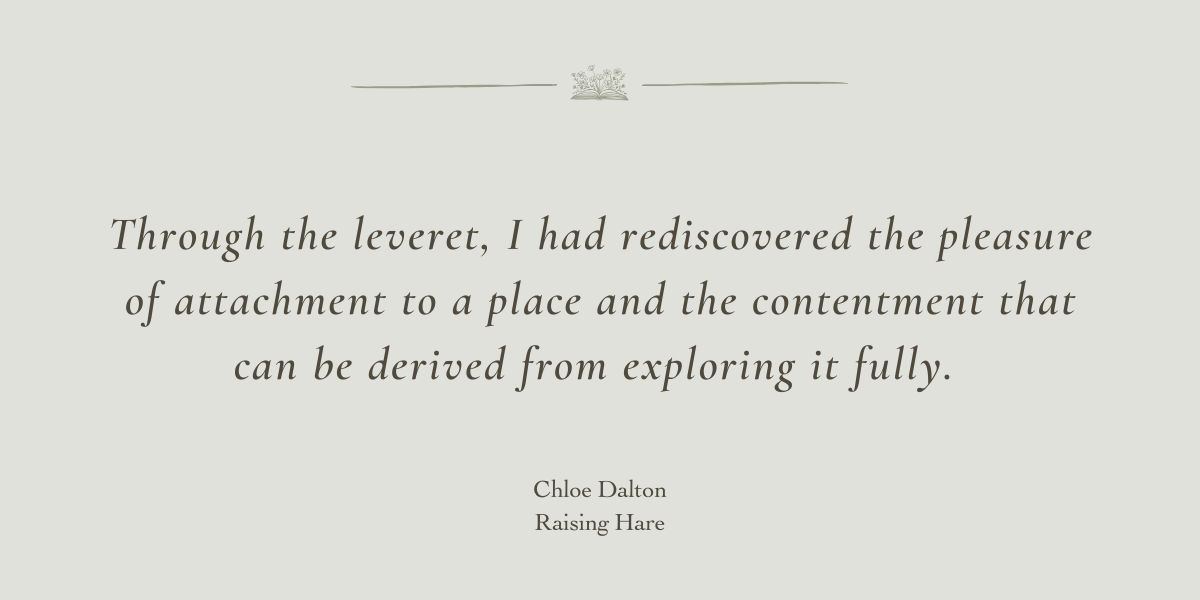
It was such a poignant experience overall that Chloe felt she had rediscovered the pleasure of attachment to a place and the contentment that can be derived from exploring it fully, rather than constantly seeking ways to leave it and believing that satisfaction can only lie in novel experiences.
Chloe was moved by the leverets's dignity, the sense of wellbeing and calm it spread, and the simplicity of its life that involved basking, rollling, resting, drowsing and dreaming, and living in the moment.
When the Hare does return to the wild, Chloe goes through the very human anxiety of worrying that it would be safe and that she had done enough or not done anything that might harm the Hare's chances in the wild. You can imagine her delight when the Hare chose to raise her first born babies in Chloe's garden - with the second born in the house itself which brought another set of unique challenges.
This book does not cease to delight and I will leave it up to you to discover the treasures it holds. Not to mention the wisdom it unfolds about this most mystical of creatures. We should all take heed so that we understand how we can lessen our destructive impact on wildlife while enjoying the benefits of the joys it can bring.
Raising Hare is a perfect Summer read (see links below) and I look forward to seeing you again soon.
Sue Cartwright
Spiral Leaf
Buy the book!
Raising Hare by Chloe Dalton
The Leaping Hare by George Ewart Evans and David Thomson
The Running Hare by John Lewis-Stempel
Common Ground by Rob Cowen
Clicking on the above link will take you to my online bookshop where Spiral Leaf may earn a small commission on books sold at no extra cost to you!
Further Reading
A Hare's Tale - a poem by Sue Cartwright
A Hare Leaps - a poem by Sue Cartwright
Thank you for sharing!
for you, for me and for Mother Nature
Latest Posts



All Posts